ERP Gaps and Limitations in Payment Controls
Enterprise resource planning (ERP) systems are the backbone of financial operations. They manage invoices, vendors, approvals, and payments. They centralize data and standardize processes. And for many organizations, they represent the single source of truth for financial activity.
But when it comes to disbursement controls, there is a growing, and increasingly dangerous, gap between what ERPs were designed to do and what finance leaders need today.
That gap is being exploited.
Fraud is more sophisticated. Payments move faster. Vendor ecosystems are more complex. And regulatory expectations are rising. In this environment, relying on an ERP alone to manage payment controls is a big risk.
This article explores the limitations of ERP systems in payment controls, the specific gaps organizations face, and how finance leaders can close those gaps using modern technology and automation.
The Role of ERPs and Where They Fall Short
ERPs were designed to record, process, and report financial transactions. Their strength lies in managing structured workflows and maintaining financial records.
But ERPs were not designed to:
- Continuously monitor risk
- Detect sophisticated fraud patterns
- Validate external data in real time
- Adapt to evolving threats
In short, ERPs are excellent systems of record but weak systems of control.
This distinction matters. Because in today’s environment, disbursement control requires dynamic, intelligent, and real-time capabilities that extend far beyond traditional ERP functionality.
ERP Gaps in Payment Controls
Understanding where ERPs fall short is the first step toward building a stronger disbursement control framework.
- Limited vendor verification capabilities. Most ERPs rely on manual processes or basic validations during vendor setup. They typically do not verify bank account ownership, conduct real-time sanctions or Office of Foreign Assets Control (OFAC) checks, or continuously monitor vendor risk. This creates a critical vulnerability at the very first control point: vendor onboarding. Fraud often begins with a compromised or fraudulent vendor record. Without robust verification, organizations are effectively trusting unverified data.
- Static, rule-based controls. ERP controls are largely based on predefined rules and workflows. While useful, these controls are static rather than adaptive, limited in their ability to detect nuanced anomalies, and dependent on manual configuration and updates. Fraudsters evolve their tactics faster than rules can be updated. Static controls quickly become outdated, leaving gaps that can be exploited.
- Lack of real-time monitoring. Most ERPs operate in batch mode, with reporting and reviews occurring after transactions are processed. They do not provide continuous transaction monitoring, real-time anomaly detection, or immediate intervention capabilities. By the time an issue is detected, the payment has often already been made, and recovery becomes difficult or impossible.
- Weak controls over vendor master changes. ERP systems often allow vendor data changes with limited verification or oversight. Common issues include insufficient validation of bank account changes, lack of independent verification, and limited audit visibility into changes. Why does this matter? Vendor-master manipulation is one of the most common and effective fraud vectors. Weak controls in this area create significant risk.
- Siloed data and limited visibility. ERPs typically operate within their own environment, with limited integration across external systems. This results in fragmented data across platforms, limited ability to correlate activity, and reduced visibility into end-to-end processes. Fraud and errors often span multiple systems. Without a unified view, critical patterns go undetected.
- Manual exception handling. When issues arise, ERPs often rely on manual processes to investigate and resolve them. This includes reviewing reports, investigating anomalies, and approving exceptions. These types of manual processes are slow, inconsistent, and prone to error, especially at scale.
- Limited audit and compliance support. While ERPs maintain transaction records, they often lack detailed documentation of control execution, evidence of verification activities, and audit-ready reporting on risk management. Regulators and auditors increasingly expect continuous, demonstrable control enforcement, not just historical records.
The Risk of Relying on ERPs Alone
When organizations rely solely on their ERP for payment controls, they create a false sense of security. Controls may appear to be in place, but in reality:
Verification is incomplete. ERP systems typically rely on initial data entry and basic validations, leaving significant gaps in verifying the authenticity of vendor information. Critical elements such as bank account ownership, beneficial ownership, and external risk indicators are often not validated at all.
Over time, even verified data can become stale or compromised without ongoing verification processes. This creates an environment where unverified or manipulated data can quietly persist within the system.
Monitoring is delayed. Most ERP systems are not designed for real-time oversight and instead rely on batch processing and periodic reporting. This means suspicious activity may not be identified until hours, days, or even weeks after it occurs. During that delay, fraudulent or erroneous payments may already be completed and are difficult to recover.
The lack of immediacy significantly weakens the organization’s ability to intervene when it matters most.
Detection is limited. ERP-based controls are typically rule-driven and lack the sophistication needed to identify complex or evolving fraud patterns. They are effective at catching known issues but struggle with subtle anomalies or coordinated fraud schemes.
Without advanced analytics or behavioral modeling, many high-risk activities appear “normal” within the system. As a result, critical warning signs are often missed.
Response is reactive. Even when issues are detected, ERP systems generally depend on manual intervention to investigate and resolve them. This introduces delays, inconsistencies, and the potential for human error in the response process.
By the time action is taken, the opportunity to prevent loss may have already passed. A reactive approach limits the organization’s ability to proactively manage risk.
This gap between perception and reality is where fraud thrives.
Finance leaders must recognize that ERP-based controls are necessary but not sufficient.
Closing Gaps with Technology and Automation
To address ERP limitations, organizations must augment their systems with purpose-built technologies that enhance disbursement controls across the entire lifecycle.
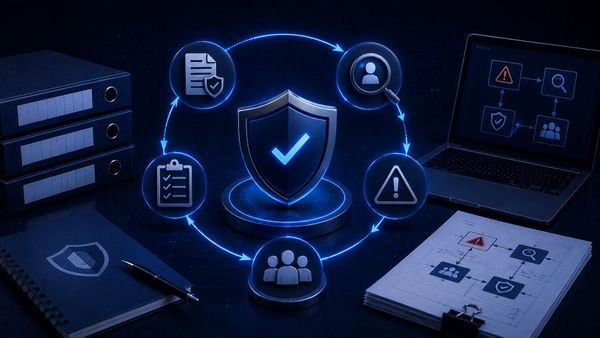
Modern solutions enable organizations to reinforce the four pillars of disbursement control: Verify, Validate, Control, Monitor.
Verify
Automated vendor verification ensures only legitimate vendors are onboarded through bank validation, sanctions screening, and secure data collection. This reduces reliance on manual processes that are prone to error and manipulation. It also creates a defensible, audit-ready record of verification activities, which is increasingly important for compliance and risk management.
Validate
Continuous validation ensures data integrity through real-time checks and cross-system verification. This helps identify discrepancies as they occur rather than after transactions have been processed. Over time, it strengthens confidence in the accuracy of financial data across the entire disbursement lifecycle.
Control
Automation enforces policies, approvals, and segregation of duties consistently. This minimizes the risk of controls being passed or inconsistently applied across teams or regions. It also ensures that control frameworks scale effectively as transaction volumes and organizational complexity grow.
Monitor
Continuous monitoring enables real-time visibility, anomaly detection, and proactive intervention. This allows finance teams to identify and respond to risks before they result in financial loss. It also provides ongoing insight into control effectiveness, enabling continuous improvement of the overall disbursement control framework.
Key Technologies That Fill ERP Gaps
Closing ERP gaps isn’t about replacing your ERP. It’s about surrounding it with the right technologies to create a modern, intelligent control environment.
Today’s leading AP and finance organizations are layering in specialized solutions that enhance visibility, strengthen controls, and enable real-time decision-making.
These technologies work together to create a connected ecosystem that continuously protects disbursements. The result is a shift from fragmented controls to a cohesive, end-to-end defense strategy.
Vendor verification platforms
Vendor verification platforms automate the collection, validation, and ongoing monitoring of vendor data. They reduce reliance on manual onboarding processes, which are often inconsistent and vulnerable to manipulation.
By verifying bank account ownership and screening sanctions or risk indicators, they ensure that only legitimate vendors enter the system. Over time, they also provide continuous oversight, helping organizations detect and respond to changes that could introduce risk.
Continuous monitoring systems
Continuous monitoring systems provide real-time oversight of transactions and vendor activity across the disbursement lifecycle. They analyze patterns, detect anomalies, and flag high-risk activity as it occurs, not after the fact. This enables finance teams to intervene before issues escalate into financial loss.
As these systems learn from data and outcomes, they become more accurate and effective over time.
Payment automation platforms
Payment automation platforms streamline and secure the execution of payments across multiple methods, including ACH, virtual card, and check. They embed controls directly into the payment process, ensuring consistency and reducing the risk of human error.
With real-time visibility into payment status and activity, finance teams gain greater control over cash outflows. Additionally, these platforms often integrate reconciliation and reporting capabilities, further strengthening control and efficiency.
Data integration and analytics tools
Data integration tools unify information across ERP systems, payment platforms, banks, and other financial systems. This eliminates data silos and enables a comprehensive, end-to-end view of disbursement activity.
Advanced analytics tools then transform this data into actionable insights, helping finance teams identify trends, anomalies, and risks. Together, they provide the foundation for more informed decision-making and stronger control environments.
AI and machine learning
AI and machine learning technologies enhance disbursement controls by identifying complex patterns and behaviors that traditional systems cannot detect. They continuously analyze large volumes of data, improving detection accuracy and reducing false positives.
These technologies adapt to evolving fraud tactics, ensuring that control frameworks remain effective over time. As a result, organizations can move from static, rule-based controls to dynamic, intelligence-driven risk management.
Strategies for AP and Finance Leaders
Addressing ERP limitations requires a strategic shift in how AP and finance leaders approach disbursement controls.
The most effective organizations take a proactive, structured approach that aligns people, processes, and technology. This means rethinking traditional assumptions, prioritizing risk, and building a framework that can adapt to change.
The following strategies provide a roadmap for strengthening disbursement controls and closing critical gaps.
- Recognize ERP limitations. AP and finance leaders must first acknowledge that ERPs were not designed to address today’s complex risk environment. This realization is essential for driving meaningful change and securing buy-in for new initiatives. By understanding where gaps exist, organizations can make more informed decisions about where to invest. This mindset shift lays the foundation for building a more resilient control framework.
- Build a layered control framework. A layered approach combines ERP functionality with specialized technologies to create a more comprehensive disbursement control environment. Each layer addresses specific risks, ensuring that no single point of failure compromises the system. This approach also provides redundancy, strengthening overall resilience. Over time, it enables organizations to adapt and evolve their controls as new risks emerge.
- Prioritize high-risk areas. Not all parts of the disbursement process carry the same level of risk, so it’s critical to focus on the areas with the greatest exposure. Vendor onboarding, bank account changes, and payment execution are often the most vulnerable points. By prioritizing these areas, organizations can achieve the greatest impact with their efforts. This targeted approach also helps accelerate time to value.
- Embrace automation. Manual processes are inherently limited in their ability to scale and maintain consistency. Automation reduces human error, improves efficiency, and ensures that controls are applied uniformly. It also frees up finance teams to focus on higher-value activities, such as analysis and strategy. Over time, automation becomes a key enabler of both control and performance.
- Implement continuous monitoring. Continuous monitoring shifts organizations from periodic reviews to real-time oversight of disbursement activity. This enables faster detection of anomalies and more immediate response to potential risks. It also provides ongoing insight into the effectiveness of controls, allowing for continuous improvement. In today’s environment, continuous monitoring is essential.
- Strengthen governance. Strong governance ensures that controls are clearly defined, consistently applied, and regularly reviewed. It establishes accountability across the organization, ensuring that responsibilities are understood and executed. Governance frameworks also support compliance by providing structure and documentation. Over time, they help create a culture of control and risk awareness.
- Invest in integration. Integration is critical to breaking down silos and enabling a unified view of financial activity. When systems communicate seamlessly, data flows more freely and insights become more actionable. This improves both visibility and control across the disbursement lifecycle. Ultimately, integration is what transforms a collection of tools into a cohesive control ecosystem.
Conclusion
ERPs are essential but they are not enough. In a world of faster payments, smarter fraud, and higher expectations, relying on ERP-based controls alone leaves organizations exposed.
By addressing ERP gaps and strengthening the four pillars of disbursement controls, AP and finance leaders can transform disbursement controls into a proactive, intelligent defense system.
What's Next?

Payment System Integration
Disbursement controls are only as strong as the systems that support them, and how well those systems work together. Accounts payable (AP) and finance teams don’t operate in a vacuum. They rely on enterprise resource planning (ERP) systems to manage transactions, banking platforms to execute payments, vendor systems to manage data, and a growing ecosystem of automation tools to improve efficiency. Yet in many organizations, these systems remain loosely connected, or worse, siloed. That fragmen
Continuous Monitoring Systems
For years, accounts payable (AP) controls have been designed around a simple premise: catch issues before or after payments are made. Pre-payment controls aim to prevent fraud and errors. Post-payment audits aim to detect what slipped through. But in today’s environment, where fraud schemes evolve rapidly, payment volumes are rising, and digital channels accelerate transaction speed, that model is no longer sufficient. AP and finance leaders need something more dynamic, more responsive, and m
AI & Automation in Disbursement Control: The New Front Line in Payment Fraud Prevention
The conversation around automation in disbursement control has fundamentally changed. Just a few years ago, automation was primarily about efficiency: reducing manual tasks, accelerating invoice processing, and improving throughput. Today, while those benefits still matter, the real driver behind automation investment is far more urgent: fraud prevention. Payment fraud is a constant, evolving threat. Business email compromise (BEC), vendor impersonation, and payment redirection schemes are
Payment System Integration
Disbursement controls are only as strong as the systems that support them, and how well those systems work together. Accounts payable (AP) and finance teams don’t operate in a vacuum. They rely on enterprise resource planning (ERP) systems to manage transactions, banking platforms to execute payments, vendor systems to manage data, and a growing ecosystem of automation tools to improve efficiency. Yet in many organizations, these systems remain loosely connected, or worse, siloed. That fragmen
Continuous Monitoring Systems
For years, accounts payable (AP) controls have been designed around a simple premise: catch issues before or after payments are made. Pre-payment controls aim to prevent fraud and errors. Post-payment audits aim to detect what slipped through. But in today’s environment, where fraud schemes evolve rapidly, payment volumes are rising, and digital channels accelerate transaction speed, that model is no longer sufficient. AP and finance leaders need something more dynamic, more responsive, and m
Overview: Technology for Disbursement Control
Disbursement control has evolved far beyond a back-office function. It is now one of the most critical lines of defense against fraud, financial loss, and compliance failure. As electronic payment volumes grow, fraud schemes become more sophisticated, and regulatory expectations increase, manual processes and fragmented systems simply cannot keep up. Technology is foundational in disbursement control. But deploying technology without a clear framework can lead to the same fragmentation and i
Onboarding Controls: Secure Vendor Onboarding
The Onboarding Moment Is a Control Moment Vendor onboarding is the point at which a new payment relationship is established — and it is one of the highest-risk moments in the entire accounts payable lifecycle. It is the moment when vendor identity is either verified or assumed, when banking information is either authenticated or taken on faith, and when the controls either hold or fail. What happens at onboarding sets the risk profile for every payment that follows. Despite this, many organiza
Know Your Business (KYB) Explained
Organizations can no longer afford to treat vendor onboarding as a routine administrative task. The process of verifying who you are doing business with, commonly known as Know Your Business (KYB), has become a foundational control for managing financial risk, ensuring regulatory compliance, and protecting against fraud. For accounts payable (AP), treasury, procurement, and compliance leaders, KYB is more than a regulatory requirement. It is a strategic capability that directly impacts the in