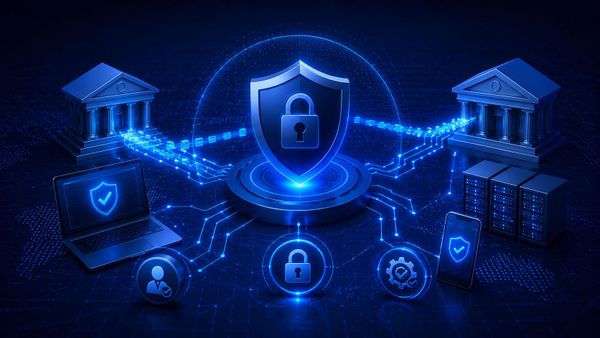
Overview: Technology for Disbursement Control
Disbursement control has evolved far beyond a back-office function. It is now one of the most critical lines of defense against fraud, financial loss, and compliance failure. As electronic payment volumes grow, fraud schemes become more sophisticated, and regulatory expectations increase, manual processes and fragmented systems simply cannot keep up.
Technology is foundational in disbursement control.
But deploying technology without a clear framework can lead to the same fragmentation and inconsistency that organizations are trying to eliminate.
That’s why leading organizations are anchoring their approach to disbursement control around four essential pillars:
- Verify
- Validate
- Control
- Monitor
Together, these pillars create a comprehensive, technology-enabled framework that transforms disbursement control from a reactive function into a proactive, defensible system of financial protection.
The Problem with Traditional Disbursement Control
Historically, disbursement control has relied on a combination of manual processes, enterprise resource planning (ERP)-based workflows, and basic approval structures. While these approaches may have been sufficient in a lower-risk environment, they are increasingly inadequate today.
The core issue is a lack of structured, consistently enforced controls across the full disbursement lifecycle.
Most organizations struggle because of their processes:
- Attempt to verify vendor information through email or informal channels
- Fail to properly validate critical data like bank account ownership
- Rely on inconsistent workflows to control approvals and changes
- Lack real-time capabilities to monitor transactions and detect anomalies
These gaps are exactly where fraud thrives.
Business email compromise (BEC), vendor impersonation, and fraudulent payment redirection schemes succeed because controls are either weak, siloed, or applied inconsistently. In this environment, relying on human vigilance alone is no longer a viable strategy.
A Modern Framework: Verify, Validate, Control, Monitor
Modern disbursement control is not defined by how technology enables each of these four pillars to work together seamlessly.
- Verify ensures that every vendor and request is legitimate
- Validate confirms that critical data is accurate and trustworthy
- Control enforces consistent, policy-driven processes
- Monitor provides continuous oversight and real-time risk detection
When supported by the right technology, these pillars create a closed-loop system where risk is addressed at every stage, not just at the point of payment.
VERIFY: Establishing Trust at the Source
The first pillar of disbursement control is verification: ensuring that the entities you are doing business with are legitimate.
This begins with vendor onboarding, where many organizations still rely on email-based processes and manual data entry. These approaches introduce significant risk, as fraudsters can easily impersonate vendors or submit falsified information.
Technology transforms this process by enabling:
Automated vendor onboarding workflows. These workflows standardize how vendor data is collected, reviewed, and approved, eliminating inconsistencies across teams and locations. They also reduce cycle times while ensuring that every onboarding request follows a controlled, policy-driven path.
Identity verification against trusted data sources. This ensures that vendor entities are validated against authoritative databases, reducing the risk of onboarding fraudulent or impersonated businesses. It also provides a defensible layer of due diligence that can stand up to audit and regulatory scrutiny.
Secure collection of vendor information through portals. Portals create a controlled environment where vendors can submit sensitive information without relying on vulnerable communication channels like email. This not only enhances security but also improves data accuracy by allowing vendors to input and manage their own information directly.
Elimination of email-based onboarding and change requests. Removing email from the process closes one of the most exploited attack vectors for fraud. It also ensures that all requests are captured, tracked, and processed within a secure and auditable system.
Verification is about answering a fundamental question: Is this entity who they claim to be?
Without strong verification at the outset, every downstream control is compromised.
VALIDATE: Ensuring Data Integrity Before Payments
While verification establishes legitimacy, validation ensures accuracy, particularly when it comes to the data used to execute payments.
This is especially critical for bank account information, which is a primary target for fraud. Modern technology enables organizations to:
Independently verify bank account ownership. This confirms that the bank account provided is legitimately associated with the vendor, reducing the risk of payment redirection fraud. It also introduces an external layer of validation that does not rely on potentially compromised internal data.
Confirm tax identification details in real time. Real-time validation ensures that tax IDs are accurate and properly matched to the vendor entity before payments are issued. This reduces compliance risk and prevents downstream issues related to reporting and regulatory filings.
Cross-check vendor data against authoritative databases. By comparing vendor information to trusted sources, organizations can identify discrepancies that may indicate fraud or errors. This process also helps maintain clean, reliable vendor-master data over time.
Detect inconsistencies or high-risk indicators. Advanced validation tools can flag anomalies such as mismatched geographic data, unusual account changes, or incomplete information. These insights allow organizations to investigate and resolve issues before they result in financial loss.
Validation introduces a critical layer of independence into the process. Rather than relying solely on internally collected data, which may be compromised, organizations can make decisions based on trusted, external sources.
In today’s risk environment, validation is a core requirement for defensible disbursement control.
CONTROL: Enforcing Consistency Across the Process
Verification and validation are only effective if they are consistently applied. That is the role of the third pillar: control.
Control ensures that every step in the disbursement process follows a defined, enforceable path.
Technology plays a central role by enabling:
Workflow automation with role-based approvals. Automated workflows ensure that approvals are routed to the right individuals based on predefined roles and thresholds. This reduces bottlenecks while maintaining strict adherence to internal policies and controls.
Enforced segregation of duties across onboarding, approval, and payment. Technology prevents a single user from controlling multiple stages of the disbursement process, reducing the risk of internal fraud or error. It also simplifies compliance by clearly defining and enforcing responsibilities across the organization.
Restrictions on unauthorized changes to vendor or payment data. Access controls and approval requirements ensure that sensitive data cannot be altered without proper authorization. This protects against both malicious activity and inadvertent errors that could impact payment accuracy.
Comprehensive audit trails for every action. Every change, approval, and transaction is recorded in a detailed and time-stamped log. This provides full transparency for auditors and enables rapid investigation in the event of an issue.
Control eliminates variability. It ensures that policies are documented and executed.
In many organizations, controls exist in theory but break down in practice due to manual workarounds or system limitations. Automation closes this gap by embedding controls directly into the process.
MONITOR: Detecting Risk in Real Time
Even with strong verification, validation, and control, risk does not disappear. It evolves. That’s why continuous monitoring is essential.
Monitoring provides real-time visibility into transactions, behavior, and anomalies, allowing organizations to identify and respond to risks before payments are released.
Advanced technologies enable:
Real-time transaction monitoring and alerting. Payments are analyzed as they are initiated, allowing organizations to identify and stop suspicious activity before funds are released. Alerts can be configured based on risk thresholds, ensuring timely and targeted responses.
Detection of unusual payment patterns or vendor behavior. Systems can identify deviations from normal activity, such as sudden changes in payment amounts or frequency. These patterns often signal emerging risks that would be difficult to detect through manual review.
Analysis of changes to vendor data or payment instructions. Monitoring tools track updates to critical data points, such as bank account details, and flag changes that may require additional verification. This ensures that high-risk modifications are reviewed before they impact payments.
Use of analytics and AI to identify emerging fraud patterns. Advanced models continuously learn from transaction data to detect new and evolving fraud schemes. This allows organizations to stay ahead of threats rather than reacting to them.
Monitoring shifts disbursement control from a static process to a dynamic one.
It answers the question: Does this transaction look right based on everything we know?
This final pillar closes the loop, ensuring that even if risks slip through earlier stages, they can still be identified and mitigated.
Bringing the Four Pillars Together Through Technology
Individually, each pillar addresses a specific aspect of disbursement risk. But the true power comes from integrating them into a single, cohesive framework.
This is where modern platforms make a meaningful difference.
By connecting vendor onboarding, data validation, workflow management, and payment execution, organizations can:
Apply verification, validation, control, and monitoring consistently across all processes. This ensures that every transaction is subject to the same rigorous standards, regardless of business unit or geography. Consistency is critical for reducing risk and maintaining a defensible control environment.
Eliminate gaps between systems where risk can emerge. Integrated platforms remove the handoffs and silos that often create blind spots in the process. This seamless flow of information reduces the likelihood of errors and prevents fraud from slipping through unnoticed.
Create a single source of truth for vendor and payment data. Centralized data ensures that all stakeholders are working from accurate, up-to-date information. It also simplifies reporting, auditing, and ongoing data management.
Enable end-to-end visibility and auditability. Finance leaders gain full transparency into the lifecycle of every transaction, from onboarding to payment. This level of visibility supports better decision-making and strengthens compliance efforts.
This integration is critical. Disbursement control is only as strong as its weakest link, and in fragmented environments, there are many.
The Role of Artificial Intelligence Across the Pillars
Artificial intelligence (AI) is enhancing each of the four pillars in meaningful ways.
- In verification, AI can identify suspicious vendor profiles or inconsistencies in submitted data. AI can analyze patterns across large datasets to detect subtle indicators of fraud that may not be obvious to human reviewers. This improves the accuracy and speed of the onboarding process while reducing risk.
- In validation, it can detect anomalies that traditional rules-based checks might miss. Machine learning models can uncover complex relationships and deviations in data that static rules cannot capture. This adds a deeper layer of intelligence to the validation process.
- In control, it can optimize workflows and identify policy exceptions. AI can recommend more efficient approval paths and highlight instances where processes deviate from established policies. This helps organizations continuously refine and strengthen their controls.
- In monitoring, it can uncover subtle patterns indicative of fraud. By analyzing behavior over time, AI can detect emerging threats before they escalate into significant issues. This proactive approach significantly enhances an organization’s ability to prevent financial loss.
AI introduces a level of adaptability and intelligence that is essential in today’s rapidly evolving threat landscape.
However, it is most effective when layered on top of strong foundational controls, not used as a replacement for them.
From Controls to Confidence
Disbursement control is about building a system that consistently protects the organization’s financial assets, no matter how the threat landscape evolves. The four pillars of disbursement control – Verify, Validate, Control, Monitor – provide a clear and practical framework for achieving this goal.
When powered by modern technology, they create a closed-loop system where:
- Every vendor is verified
- Every data point is validated
- Every process is controlled
- Every transaction is monitored
This is what a defensible disbursement control environment looks like.
What's Next?
Continuous Monitoring Systems
For years, accounts payable (AP) controls have been designed around a simple premise: catch issues before or after payments are made. Pre-payment controls aim to prevent fraud and errors. Post-payment audits aim to detect what slipped through. But in today’s environment, where fraud schemes evolve rapidly, payment volumes are rising, and digital channels accelerate transaction speed, that model is no longer sufficient. AP and finance leaders need something more dynamic, more responsive, and m
Payment Authorization Best Practices
Payment authorization is one of the most critical control points in the entire disbursement process. It is the moment when an organization decides whether funds should leave the business. If weak authorization controls allow fraudulent, duplicate, inaccurate, or unauthorized payment to move forward, the financial and operational consequences can be significant. Strong payment authorization practices help organizations ensure that every payment is legitimate, properly reviewed, accurately docu
AI & Automation in Disbursement Control: The New Front Line in Payment Fraud Prevention
The conversation around automation in disbursement control has fundamentally changed. Just a few years ago, automation was primarily about efficiency: reducing manual tasks, accelerating invoice processing, and improving throughput. Today, while those benefits still matter, the real driver behind automation investment is far more urgent: fraud prevention. Payment fraud is a constant, evolving threat. Business email compromise (BEC), vendor impersonation, and payment redirection schemes are
Payment System Integration
Disbursement controls are only as strong as the systems that support them, and how well those systems work together. Accounts payable (AP) and finance teams don’t operate in a vacuum. They rely on enterprise resource planning (ERP) systems to manage transactions, banking platforms to execute payments, vendor systems to manage data, and a growing ecosystem of automation tools to improve efficiency. Yet in many organizations, these systems remain loosely connected, or worse, siloed. That fragmen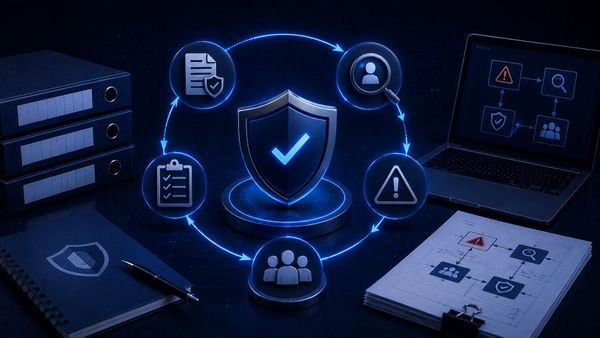
ERP Gaps and Limitations in Payment Controls
Enterprise resource planning (ERP) systems are the backbone of financial operations. They manage invoices, vendors, approvals, and payments. They centralize data and standardize processes. And for many organizations, they represent the single source of truth for financial activity. But when it comes to disbursement controls, there is a growing, and increasingly dangerous, gap between what ERPs were designed to do and what finance leaders need today. That gap is being exploited. Fraud is mo
Continuous Monitoring Systems
For years, accounts payable (AP) controls have been designed around a simple premise: catch issues before or after payments are made. Pre-payment controls aim to prevent fraud and errors. Post-payment audits aim to detect what slipped through. But in today’s environment, where fraud schemes evolve rapidly, payment volumes are rising, and digital channels accelerate transaction speed, that model is no longer sufficient. AP and finance leaders need something more dynamic, more responsive, and m
Onboarding Controls: Secure Vendor Onboarding
The Onboarding Moment Is a Control Moment Vendor onboarding is the point at which a new payment relationship is established — and it is one of the highest-risk moments in the entire accounts payable lifecycle. It is the moment when vendor identity is either verified or assumed, when banking information is either authenticated or taken on faith, and when the controls either hold or fail. What happens at onboarding sets the risk profile for every payment that follows. Despite this, many organiza
Know Your Business (KYB) Explained
Organizations can no longer afford to treat vendor onboarding as a routine administrative task. The process of verifying who you are doing business with, commonly known as Know Your Business (KYB), has become a foundational control for managing financial risk, ensuring regulatory compliance, and protecting against fraud. For accounts payable (AP), treasury, procurement, and compliance leaders, KYB is more than a regulatory requirement. It is a strategic capability that directly impacts the in