
AI & Automation in Disbursement Control: The New Front Line in Payment Fraud Prevention
The conversation around automation in disbursement control has fundamentally changed. Just a few years ago, automation was primarily about efficiency: reducing manual tasks, accelerating invoice processing, and improving throughput.
Today, while those benefits still matter, the real driver behind automation investment is far more urgent: fraud prevention.
Payment fraud is a constant, evolving threat. Business email compromise (BEC), vendor impersonation, and payment redirection schemes are increasing in both frequency and sophistication.
At the same time, the nature of fraud itself is changing. Fraudsters are no longer just exploiting process gaps, they are leveraging the same advanced technologies that organizations are adopting, particularly artificial intelligence (AI).
This has created a new reality for finance leaders: The fight against fraud is now an AI-driven arms race.
The New Fraud Landscape: Faster, Smarter, and More Scalable
Fraud has always adapted to the controls designed to stop it. But AI has accelerated that evolution dramatically.
Today’s fraud schemes are:
- Highly personalized: AI-generated communications mimic tone, context, and behavior
- Hyper-realistic: Deepfake invoices, synthetic identities, and voice cloning are emerging threats
- Automated at scale: Fraudsters can launch coordinated attacks across organizations simultaneously
Fraud is no longer opportunistic. It is engineered. In this environment, traditional controls, such as manual reviews, static rules, and after-the-fact audits, are simply not enough.
Why Traditional Fraud Controls Are Failing
Most organizations still rely on a combination of:
- Manual verification processes
- Enterprise resource planning (ERP)-based approval workflows
- Static fraud detection rules
- Periodic audits and reviews
The problem is these controls are too slow, too reactive, and too easy to bypass. Fraud today happens in real time. Decisions must be made instantly. And subtle anomalies, not obvious red flags, are often the only indicators of risk.
Static rules struggle to detect these patterns. Human reviewers cannot scale to the volume or complexity of modern transactions. This is where AI changes the equation.
How AI is Transforming Payment Fraud Prevention
AI is redefining how organizations detect, prevent, and respond to fraud.
Unlike traditional systems, AI does not rely solely on predefined rules. Instead, it learns from data, analyzing patterns, behaviors, and anomalies across millions of transactions.
This enables several powerful capabilities:
- Real-time fraud detection. AI systems can evaluate transactions as they occur, identifying suspicious activity before payments are executed. By analyzing behavioral data, transaction history, and contextual signals, AI can detect anomalies that would otherwise go unnoticed. These systems enable faster decision-making, reduce false positives, and improve overall payment accuracy. This shift from retrospective review to real-time prevention is one of the most important advancements in disbursement control.
- Behavioral and pattern recognition. Traditional fraud detection relies on rules, such as thresholds, flags, and predefined conditions.
AI goes further by identifying patterns across data:
- Changes in vendor behavior
- Unusual payment timing or amounts
- Deviations from historical transaction patterns
- Relationships between entities and transactions
Machine learning models continuously refine their understanding of “normal,” making it easier to detect what is abnormal. This is particularly important in identifying complex or coordinated fraud schemes that span multiple transactions or entities.
Adaptive and continuous learning. Fraud is not static and neither is AI. AI models continuously learn from new data, enabling them to adapt to emerging fraud tactics. This is critical in a landscape where fraudsters are constantly evolving their methods. Instead of relying on periodic rule updates, organizations can deploy systems that improve over time, becoming more accurate and more effective with each transaction analyzed.
Reduction of false positives. One of the biggest challenges in fraud prevention is balancing security with operational efficiency. Traditional systems often generate high volumes of false positives, forcing AP teams to spend valuable time investigating legitimate transactions. AI improves this balance by making more precise decisions, reducing unnecessary alerts while maintaining strong fraud detection capabilities. This not only improves efficiency but also enhances the experience of suppliers and internal stakeholders.
Automation: The Foundation That Makes AI Work
While AI is the intelligence layer, automation is the infrastructure that enables it to operate effectively. Without automation, even the most advanced AI models cannot deliver meaningful impact.
Automation ensures that:
- Data is captured consistently and accurately
- Workflows are standardized and enforced
- Decisions can be made in real time
- Controls are applied uniformly across processes
In other words, automation creates a structured environment that AI needs to function. This is why leading organizations are combining AI with end-to-end automation across the disbursement lifecycle.
AI Across the Disbursement Lifecycle
The true power of AI emerges when it is applied across the entire payment process, not just at the point of transaction.
When AI is embedded end-to-end, it creates a unified layer of intelligence that connects data, decisions, and controls across the lifecycle. This eliminates silos and ensures that risk signals identified in one stage can inform actions in another.
The result is a more cohesive, adaptive system that continuously improves its ability to prevent fraud.
Vendor onboarding. AI can analyze vendor data during onboarding to identify inconsistencies, suspicious patterns, or high-risk indicators. This helps prevent fraudulent vendors from entering the system in the first place. AI can also compare new vendor records against historical onboarding data to identify duplicate entities or subtle variations that may indicate impersonation attempts.
In addition, it can flag vendors with unusual attributes, such as mismatched geographic or banking details, for further review. Over time, this creates a more intelligent onboarding process that becomes increasingly effective at identifying risk before it enters the organization.
Data validation. AI enhances validation by identifying anomalies in bank account information, tax data, and vendor records. It can detect subtle discrepancies that traditional validation methods might miss, adding an additional layer of protection.
Beyond anomaly detection, AI can assess the overall risk profile of a data set by analyzing patterns across multiple attributes simultaneously. It can also prioritize validation efforts by focusing attention on high-risk transactions, improving both efficiency and effectiveness. This ensures that validation processes are not only more accurate, but also more strategically applied.
Approval workflows. AI can optimize workflows by identifying unusual approval patterns or policy deviations. This ensures that controls are not only enforced but also continuously improved.
AI can also recommend dynamic approval paths based on transaction risk, routing higher-risk items through more rigorous review processes. It can identify bottlenecks or inefficiencies in workflows, enabling organizations to streamline operations without compromising control. Over time, this leads to smarter, more responsive workflows that adapt to both risk and business needs.
Payment execution. At the point of payment, AI evaluates transactions in real time, analyzing risk signals before funds are released. This is where AI delivers its most immediate and measurable impact.
AI can incorporate a wide range of signals, including behavioral patterns, transaction history, and external data, to make highly informed decisions in milliseconds. It can also trigger step-up authentication or additional verification when risk thresholds are exceeded. This ensures that high-risk transactions are intercepted before funds leave the organization, significantly reducing potential losses.
Post-payment monitoring. AI continues to analyze activity after payments are made, identifying trends, emerging risks, and opportunities to strengthen controls. This creates a continuous feedback loop that improves the entire system.
AI can also uncover long-term patterns that may indicate systemic vulnerabilities or process weaknesses. These insights can be used to refine upstream controls, making the entire disbursement lifecycle more resilient. Over time, this feedback loop transforms fraud prevention from a reactive function into a continuously evolving capability.
Key Trends Shaping AI in Payment Fraud Prevention
As AI adoption accelerates, several key trends are shaping how organizations approach fraud prevention.
These trends are not just influencing technology decisions. They are redefining expectations for how quickly and effectively organizations must respond to risk.
Finance leaders must understand these shifts to ensure their strategies remain aligned with the evolving threat landscape. Ignoring these trends can leave organizations exposed to risks that are becoming increasingly difficult to detect using traditional approaches.
1. The Rise of AI vs. AI
Fraudsters are using AI and so are organizations.
This dynamic has created a continuous cycle of innovation on both sides.
As a result, fraud prevention is an ongoing technological competition. Organizations must continuously update and refine their AI models to keep pace with increasingly sophisticated threats. Those that fail to evolve risk falling behind in an environment where attackers are constantly improving their capabilities.
2. Real-Time Everything
The shift to faster payments, real-time processing, and instant decision-making is raising the stakes for fraud prevention.
Organizations can no longer rely on batch processing or delayed reviews. Fraud detection must occur in milliseconds, not hours or days. AI is uniquely suited to meet this demand.
This trend is being accelerated by the growth of instant payment networks and digital transactions. As settlement speeds increase, the window for detecting and stopping fraud continues to shrink. Organizations must therefore invest in technologies that can operate at the same speed as the transactions they are protecting.
3. Convergence of Data Signals
Effective fraud detection increasingly depends on combining multiple data sources:
- Vendor onboarding data
- Transaction data
- Behavioral signals
- External validation data
Modern AI systems integrate these signals to create a holistic view of risk, improving accuracy and reducing blind spots.
This convergence enables organizations to move beyond isolated data points and toward a more contextual understanding of risk. By analyzing how different data elements interact, AI can uncover patterns that would otherwise remain hidden.
This integrated approach is essential for detecting complex, multi-layered fraud schemes.
4. Increasing Regulatory and Compliance Pressure
Regulators are placing greater emphasis on fraud prevention, data validation, and auditability. Organizations must not only prevent fraud, but they must also demonstrate that their controls are effective and consistently applied.
AI, when paired with strong governance, provides the transparency and documentation needed to meet these expectations.
In addition, regulators are increasingly focused on how decisions are made, not just the outcomes. This means organizations must ensure that AI-driven processes are explainable and well-documented. Strong governance frameworks are essential for balancing innovation with compliance and accountability.
5. The Gap Between Threat and Adoption
Despite the clear benefits of AI, adoption remains uneven. This gap represents both a risk, and an opportunity, for finance leaders.
Organizations that move quickly to adopt AI can gain a significant advantage in both risk reduction and operational efficiency. Conversely, those that delay may find themselves increasingly vulnerable to advanced fraud tactics. Closing this gap is a strategic imperative.
Building an AI-Driven Fraud Prevention Strategy
Adopting AI requires a strategic approach.
Finance leaders should focus on:
- Integrating AI into existing workflows. AI should be embedded directly into core financial processes such as vendor onboarding, invoice approval, and payment execution, not layered on as a separate tool. This ensures that insights generated by AI can drive immediate action rather than sit outside the operational flow. Seamless integration also improves user adoption by enabling teams to work within familiar systems while benefiting from enhanced intelligence.
- Ensuring high-quality, consistent data. AI is only as effective as the data it relies on, making data quality a foundational requirement for success. Organizations must standardize data capture, eliminate duplicates, and maintain accurate vendor and transaction records. Strong data governance practices ensure that AI models are trained in reliable information, improving both accuracy and trust in outcomes.
- Combining AI with strong foundational controls. AI should enhance, not replace, core controls such as verification, validation, and segregation of duties. These foundational elements provide the structure and discipline that AI needs to operate effectively. When combined, they create a layered defense strategy that addresses both known risks and emerging threats.
- Establishing governance and oversight. AI-driven decisions must be transparent, explainable, and aligned with organizational policies and regulatory expectations. This requires clear governance frameworks that define how models are developed, deployed, monitored, and updated. Ongoing oversight ensures that AI continues to perform as intended and that any biases or risks are identified and addressed.
- Investing in change management. Successful AI adoption depends on people as much as technology. Finance teams must understand how AI works, how to interpret its output, and how to act on its insights. Training, communication, and leadership alignment are essential to building trust and ensuring that AI-driven processes are embraced rather than resisted.
The goal is to embed it into a broader, cohesive disbursement control framework.
The Future of Disbursement Control is Intelligent
The role of accounts payable (AP) and finance leaders is changing.
They are no longer just responsible for processing payments. They are responsible for protecting them. In an environment where fraud is faster, smarter, and more scalable than ever before, traditional approaches are no longer sufficient.
AI and automation are essential capabilities. They enable organizations to detect fraud in real time, adapt to emerging threats, apply controls consistently, and operate with confidence.
What's Next?

Vendor Selection & Due Diligence: Authenticating the Vendor
Before a single invoice is approved, accounts payable must have established that the vendor is who it claims to be, that it is authorized to receive payment, and that its risk profile is commensurate with what is being purchased. The disbursement of funds through accounts payable is not a clerical act. It is the terminal point of a control system whose integrity depends, above all, on one foundational question: is this vendor legitimate? Vendor selection and due diligence are not procurement fu
Vendor Data Validation Explained: Why Accuracy in the Vendor Master Is a Control Imperative
What Vendor Data Validation Is — and What It Is Not Vendor data validation is the systematic process of confirming that the information held in an organization's vendor master file is accurate, complete, current, and trustworthy. It encompasses the verification of banking information, tax identification, business addresses, entity status, and the relationships between related data elements — and it applies not only at the point of vendor onboarding but throughout the life of the vendor relation
Payment System Integration
Disbursement controls are only as strong as the systems that support them, and how well those systems work together. Accounts payable (AP) and finance teams don’t operate in a vacuum. They rely on enterprise resource planning (ERP) systems to manage transactions, banking platforms to execute payments, vendor systems to manage data, and a growing ecosystem of automation tools to improve efficiency. Yet in many organizations, these systems remain loosely connected, or worse, siloed. That fragmen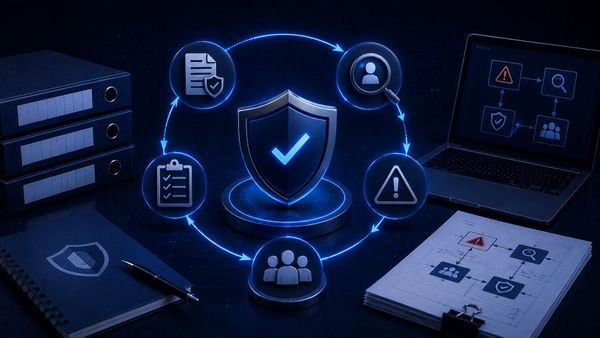
ERP Gaps and Limitations in Payment Controls
Enterprise resource planning (ERP) systems are the backbone of financial operations. They manage invoices, vendors, approvals, and payments. They centralize data and standardize processes. And for many organizations, they represent the single source of truth for financial activity. But when it comes to disbursement controls, there is a growing, and increasingly dangerous, gap between what ERPs were designed to do and what finance leaders need today. That gap is being exploited. Fraud is mo
Continuous Monitoring Systems
For years, accounts payable (AP) controls have been designed around a simple premise: catch issues before or after payments are made. Pre-payment controls aim to prevent fraud and errors. Post-payment audits aim to detect what slipped through. But in today’s environment, where fraud schemes evolve rapidly, payment volumes are rising, and digital channels accelerate transaction speed, that model is no longer sufficient. AP and finance leaders need something more dynamic, more responsive, and m
Overview: Technology for Disbursement Control
Disbursement control has evolved far beyond a back-office function. It is now one of the most critical lines of defense against fraud, financial loss, and compliance failure. As electronic payment volumes grow, fraud schemes become more sophisticated, and regulatory expectations increase, manual processes and fragmented systems simply cannot keep up. Technology is foundational in disbursement control. But deploying technology without a clear framework can lead to the same fragmentation and i
Onboarding Controls: Secure Vendor Onboarding
The Onboarding Moment Is a Control Moment Vendor onboarding is the point at which a new payment relationship is established — and it is one of the highest-risk moments in the entire accounts payable lifecycle. It is the moment when vendor identity is either verified or assumed, when banking information is either authenticated or taken on faith, and when the controls either hold or fail. What happens at onboarding sets the risk profile for every payment that follows. Despite this, many organiza
Know Your Business (KYB) Explained
Organizations can no longer afford to treat vendor onboarding as a routine administrative task. The process of verifying who you are doing business with, commonly known as Know Your Business (KYB), has become a foundational control for managing financial risk, ensuring regulatory compliance, and protecting against fraud. For accounts payable (AP), treasury, procurement, and compliance leaders, KYB is more than a regulatory requirement. It is a strategic capability that directly impacts the in