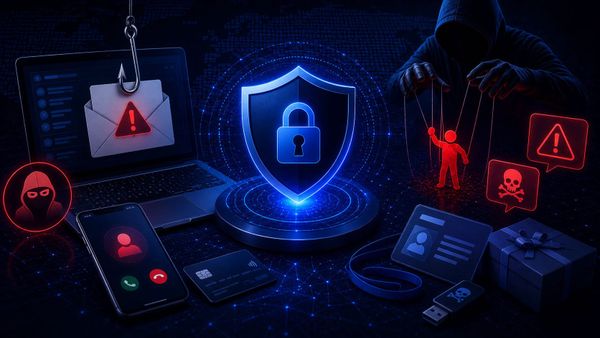
Payment Methods and Risk: An Overview
The Payment Method Is the Risk Profile
Not all disbursements carry the same risk. A check mailed to a vendor carries a different fraud exposure than a same-day wire transfer. An ACH credit processed through a validated banking relationship presents different vulnerabilities than a real-time payment that settles in seconds and cannot be recalled. A virtual card introduces controls that paper checks cannot replicate — and limitations that experienced fraudsters know how to work around.
For CFOs, Controllers, and financial operations leaders, understanding payment methods is not primarily an operational question. It is a risk management question. The method by which funds leave an organization determines the speed of irrecoverability, the available control mechanisms, the fraud vectors that must be defended, and the regulatory framework that governs the transaction. Every disbursement approval is, implicitly, an acceptance of the risk profile that comes with the payment method selected.
This article provides a framework for understanding those risk profiles. The articles that follow examine each major payment method in detail — ACH, checks, wire transfers, virtual cards, and real-time payments — covering the specific fraud risks each presents and the controls available to mitigate them.
Each Payment Method Has Risk
In many AP and treasury functions, payment method selection is treated as an operational default rather than a deliberate control decision. Vendors are paid the way they've always been paid. For example:
• Wires are used for large transactions because that's the convention.
• Checks persist because the system hasn't been updated.
• Real-time payment rails are adopted to improve vendor relationships without a corresponding risk assessment.
This default posture is a vulnerability.
Payment method risk sits at the intersection of three forces that have converged sharply in the last decade:
• the rapid expansion of available payment rails,
• the sophistication of fraud actors who understand those rails better than many finance teams do, and
• the regulatory evolution that is imposing new obligations on organizations that originate payments.
An AP function that has not deliberately mapped its payment method mix to its control environment is operating with an incomplete risk picture — one that fraud actors are likely to have mapped more carefully than the organization itself.
The Association of Certified Fraud Examiners' 2024 Report to the Nations found that billing schemes — many of which involve manipulation of payment method or payment destination — remain among the costliest and most common forms of occupational fraud. The FBI's 2024 Internet Crime Complaint Center data shows Business Email Compromise losses exceeded $3 billion in a single reporting year, with wire fraud and ACH redirect attacks as the primary mechanisms of loss. These are not abstract statistics; they represent specific, repeatable attack patterns that exploit identifiable weaknesses in how organizations manage the payment methods they use every day.
The Five Payment Methods: A Risk Overview
The payment landscape for organizational disbursements has never been more complex. Five major payment methods — each with distinct technical characteristics, control mechanisms, and fraud vulnerabilities — now coexist in most AP environments.
ACH (Automated Clearing House) payments are the backbone of domestic business-to-business payments, handling trillions of dollars annually across payroll, vendor payments, and recurring disbursements. ACH operates on a batch-processing model with settlement windows that typically run same-day or next-day. Its broad adoption, rule-governed infrastructure, and reversibility window make it a relatively controllable payment method — but that reversibility is not unlimited, and the payment rail carries significant fraud risks including unauthorized debits, account takeover, and the increasingly common vendor banking redirect attack. Nacha's evolving rule set, including the WEB Debit Account Validation Rule and the 2026 Risk Management amendments, is reshaping compliance obligations for ACH originators in ways that many organizations have not fully absorbed.
Checks remain more prevalent in organizational disbursements than their reputation suggests, particularly among mid-market companies and in industries where vendor preferences or contract terms sustain their use. They are also the payment method with the longest fraud history and the most thoroughly documented vulnerability profile. Check fraud losses surged in recent years — the American Bankers Association reported losses exceeding $26 billion annually — driven by mail theft, check washing, counterfeiting, and the exploitation of the lag between issuance and clearing. Despite their age, checks are by no means a low-risk payment method, and organizations that continue to issue them without robust positive pay controls, controlled disbursement accounts, and physical security protocols are carrying avoidable exposure.
Wire transfers are the payment method with the most immediate and consequential risk profile. Wire payments are irrevocable upon completion. There is no ACH return window, no stop-payment mechanism, no chargeback right. When a wire is sent to a fraudulent account, recovery depends entirely on the speed of detection, the cooperation of receiving institutions, and — frequently — law enforcement intervention that may arrive too late. Wire fraud is the preferred endpoint of Business Email Compromise attacks precisely because of this irreversibility. The average loss per wire fraud incident is measured in hundreds of thousands of dollars; large-transaction wire fraud regularly reaches the millions. The controls available for wire payments — dual authorization, callback verification, dedicated approval workflows — are well established, but their effectiveness depends entirely on consistent execution.
Virtual cards are the payment method most often positioned as a control solution, and in meaningful respects that positioning is accurate. A virtual card is a single-use card number generated for a specific transaction, vendor, and amount — characteristics that severely limit the utility of a compromised card number and provide a level of transaction specificity that ACH and check payments cannot match. Virtual cards also generate interchange revenue for the issuing organization, a financial benefit that has driven their adoption in procurement and AP programs. But virtual cards are not without risk. Vendor acceptance remains inconsistent. Card-not-present fraud, account takeover at the card management level, and the complexity of reconciling virtual card transactions at scale all represent real operational and fraud exposures that a control framework must address.
Real-time payments (RTP) represent the newest and fastest-evolving segment of the payment landscape. The RCH RTP network and the Federal Reserve's FedNow service have introduced payment rails that settle in seconds, 24 hours a day, 7 days a week, 365 days a year. The operational appeal is substantial — immediate settlement eliminates float, accelerates vendor payment, and supports time-sensitive disbursement use cases. The risk implication is equally substantial: real-time payments are generally irrevocable, and the settlement speed that makes them operationally attractive also compresses the window available for fraud detection to essentially zero. As RTP adoption expands — and regulatory and market pressure is driving adoption — organizations that have not built pre-authorization controls appropriate to the rail's characteristics are accepting a risk profile they may not fully understand.
A Framework for Thinking About Payment Method Risk
Across these five payment methods, four dimensions of risk provide a consistent analytical framework.
Irrecoverability — the degree to which a misdirected payment can be reversed, recalled, or recovered — is the most consequential dimension. Irrecoverability is a function of both the payment method's technical characteristics and the speed at which fraud is detected. Wire transfers and real-time payments sit at the high end of this dimension; checks and ACH offer more recovery optionality, though neither is without meaningful constraints.
Fraud vector specificity — the particular methods by which each payment type is exploited — shapes the control design required. Check fraud exploits physical characteristics of the instrument; wire fraud exploits social engineering and authorization processes; ACH fraud exploits banking data and origination credentials; real-time payment fraud exploits the pre-authorization window. Controls designed for one payment method do not necessarily transfer to another.
Control availability — the mechanisms an organization can deploy to prevent or detect fraud for a given payment method — varies substantially. Positive pay controls exist for checks and ACH; dual authorization is available for wires; spending controls are embedded in virtual card architecture. But control availability is meaningless if controls are not implemented and consistently enforced.
Regulatory and compliance obligations — the rules, standards, and legal frameworks that govern each payment method — are evolving rapidly and unevenly. Nacha's rule amendments impose new account validation obligations on ACH originators. CFPB regulatory activity affects consumer-facing real-time payment applications. Wire transfer compliance intersects with Bank Secrecy Act and OFAC obligations. An organization's payment method mix determines its compliance surface — a fact that finance and compliance functions must address together.
The Control Imperative
The central argument of this series is that disbursements are a control function — the last point at which an organization can prevent value from leaving on a fraudulent or erroneous basis. Payment method risk is where that argument becomes most concrete. The specific method by which a payment is made determines what controls are available, what fraud actors will attempt, and what the cost of a control failure will be.
The articles that follow examine each payment method in the depth that a working financial controls framework requires: the mechanics of how the method operates, the specific fraud risks it presents, the real cases that illustrate those risks, and the control architecture that defensible practice demands.
What's Next?
ACH Payments: How They Work, How They're Exploited, and How to Defend Them
Introduction: The Rail That Moves American Commerce The Automated Clearing House network is the circulatory system of American business payments. In 2024, the ACH network processed more than 31 billion transactions totaling over $80 trillion — payroll, vendor payments, tax disbursements, insurance premiums, mortgage payments, and thousands of other recurring and one-time payment types. For most organizations, ACH is the primary mechanism by which vendor payments are made (and payroll is deliver
Ensuring Vendor Data Accuracy and Completeness: Governance, Hygiene and Controls
Data Accuracy as a Governance Imperative The other articles in this section have addressed specific categories of vendor data validation: bank account verification, TIN matching, address verification, and entity relationship identification. Each addresses a defined vulnerability in the vendor record. Each provides a layer of assurance that a specific data element is what it purports to be. Data accuracy governance addresses the layer beneath all of the categories of vendor data validation, det
Payment Processing Controls
Payment processing is one of the most sensitive and high-risk activities within the organization. Every payment that moves through the business represents an opportunity for efficiency and operational excellence, but also a potential point of fraud, error, compliance failure, or financial loss. That is why payment processing controls are essential. Payment processing controls help organizations ensure that payments are accurate, authorized, secure, compliant, and properly executed before fund
Exceptions Handling in Payments
Exceptions are an unavoidable part of the payment process. No matter how strong an organization’s controls may be, situations will arise that fall outside standard workflows. A supplier may submit incomplete information. An invoice may not match a purchase order (PO). Payment may require urgent processing. Banking details may suddenly change. A duplicate payment warning may appear moments before disbursement. The question is not whether exceptions will occur. The question is whether they are ha
Payment Authorization Best Practices
Payment authorization is one of the most critical control points in the entire disbursement process. It is the moment when an organization decides whether funds should leave the business. If weak authorization controls allow fraudulent, duplicate, inaccurate, or unauthorized payment to move forward, the financial and operational consequences can be significant. Strong payment authorization practices help organizations ensure that every payment is legitimate, properly reviewed, accurately docu
Internal Payment Controls Explained
Internal payment controls are one of the most important safeguards an organization can put in place. Every disbursement represents a moment of risk. Once funds leave the organization, recovering them can be difficult, time-consuming, or impossible. That is why organizations need strong internal controls that ensure every payment is accurate, authorized, legitimate, and properly documented before money moves. Internal payment controls are not just about preventing fraud. They also help reduc
Overview: Payment Controls in Accounts Payable
Payment controls are a business imperative for today’s accounts payable (AP) and finance leaders. AP departments sit at one of the most critical points in the organization’s financial ecosystem: the moment before money leaves the business. Every payment, whether by Automated Clearing House (ACH), wire, virtual card, Real Time Payment (RTP), or check, represents both a business transaction and a potential risk event. Weak controls can lead to duplicate payments, unauthorized disbursements, fraud
Onboarding Controls: Secure Vendor Onboarding
The Onboarding Moment Is a Control Moment Vendor onboarding is the point at which a new payment relationship is established — and it is one of the highest-risk moments in the entire accounts payable lifecycle. It is the moment when vendor identity is either verified or assumed, when banking information is either authenticated or taken on faith, and when the controls either hold or fail. What happens at onboarding sets the risk profile for every payment that follows. Despite this, many organiza
Know Your Business (KYB) Explained
Organizations can no longer afford to treat vendor onboarding as a routine administrative task. The process of verifying who you are doing business with, commonly known as Know Your Business (KYB), has become a foundational control for managing financial risk, ensuring regulatory compliance, and protecting against fraud. For accounts payable (AP), treasury, procurement, and compliance leaders, KYB is more than a regulatory requirement. It is a strategic capability that directly impacts the in